Recovery after knee surgery follows distinct phases, each requiring specific exercises and precautions. Your rehabilitation protocol depends on your surgery type – whether arthroscopy, ligament reconstruction, or total knee replacement. Success hinges on following your structured program while respecting your body’s healing timeline.
Different knee surgeries require vastly different rehabilitation approaches. Arthroscopic meniscus repair allows weight-bearing within days, while ACL reconstruction demands several weeks of protected movement. Total knee replacement rehabilitation spans months, progressing from basic mobility to full function. Your surgeon and physiotherapist tailor your program based on surgical findings, tissue quality, and your pre-surgery fitness level.
Immediate Post-Surgery Phase (Days 1-7)
The first week focuses on reducing swelling, managing pain, and initiating gentle movement. Ice application for 20 minutes every 2-3 hours controls inflammation. Elevate your leg above heart level when resting, using pillows to support the entire leg length. Compression bandaging provides support but shouldn’t restrict circulation; you should fit two fingers under the bandage’s edge.
Begin ankle pumps immediately – flex and point your foot 10-15 times hourly while awake. This simple exercise prevents blood clots and reduces swelling. Quadriceps sets involve tightening your thigh muscle while keeping your leg straight, holding for 5 seconds, repeating 10 times every hour. These exercises maintain muscle activation despite limited movement.
Pain medication timing matters. Take prescribed analgesics 30 minutes before physiotherapy sessions for optimal participation. Track your pain levels using a 0-10 scale, aiming to keep discomfort below 5/10 during exercises. Sharp, stabbing pain signals you’ve pushed too hard – distinguish this from normal post-surgical aching.
Early Mobilisation (Week 2-4)
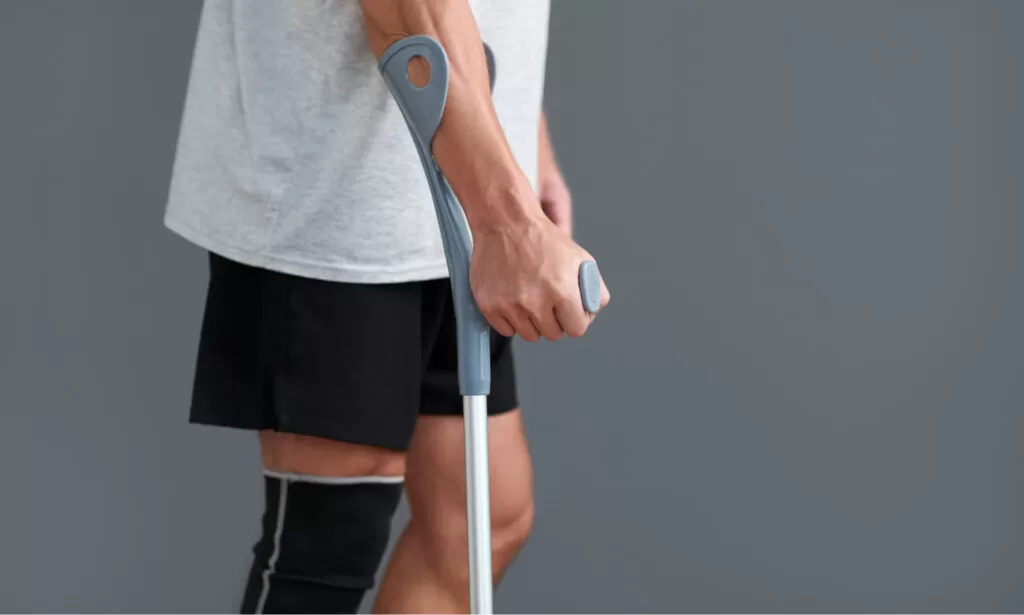
Weight-bearing progression varies by surgery type. Meniscus repair often requires 4-6 weeks of partial weight-bearing using crutches. ACL reconstruction typically allows toe-touch weight-bearing immediately, progressing to full weight by week 4. Total knee replacement patients usually bear weight as tolerated from day one, using a walker initially.
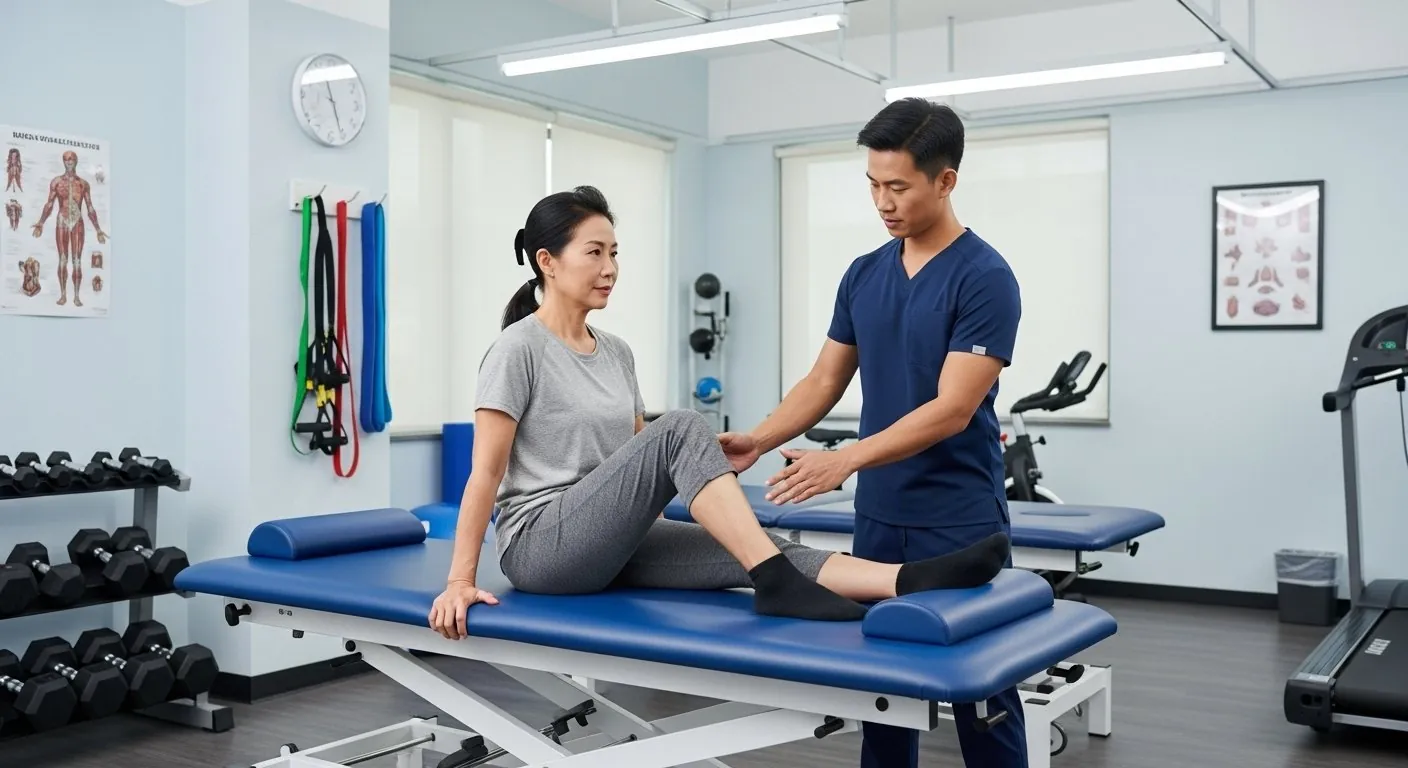
Range-of-motion exercises become the primary focus. Heel slides involve lying flat, slowly bending your knee by sliding your heel toward your buttocks. Use a towel looped around your foot for assistance if needed. Aim for 10-15 repetitions, 3-4 times daily. Progress is measured in degrees – your physiotherapist uses a goniometer to track improvement.
Seated knee flexion utilises gravity assistance. Sit on the edge of a chair, let your operated leg hang, then gently swing it back and forth. This pendulum motion encourages natural bending without forcing movement. Add ankle weights only when you can comfortably achieve 90 degrees of flexion.
Walking pattern correction prevents compensatory habits. Focus on equal step length, avoiding limping by shortening your good leg’s stride rather than overextending your operated leg. Use mobility aids until you walk without deviation – premature crutch abandonment creates poor movement patterns that persist long-term.
Strengthening Phase (Week 4-8)
Muscle strengthening progresses systematically. Begin with isometric exercises – muscle contractions without joint movement. Wall sits start at a 30-degree knee bend, holding for 10-30 seconds. Your back remains flat against the wall, weight distributed equally between both legs. Increase hold duration before deepening the squat angle.
Straight-leg raises challenge the hip flexors and quadriceps simultaneously. Lying flat, tighten your thigh muscle first, then lift your leg 6-8 inches. Hold 3-5 seconds before lowering slowly. Control matters more than height – jerky movements indicate you’re compensating with momentum rather than strength.
Resistance band exercises add graduated challenge. Secure the band around a stable object at ankle height. Face away from the anchor point, loop the band around your ankle, then extend your leg backwards against resistance. This targets the hamstrings, which are often neglected in early rehabilitation. Progress from yellow (lightest) through black (heaviest) resistance bands.
Balance training begins once you comfortably bear full weight. Single-leg stands start near a wall for safety, progressing from 10 seconds to 1 minute. Close your eyes to increase difficulty – visual input masks proprioceptive deficits. Add unstable surfaces, such as foam pads, only after mastering solid ground balance.
Functional Recovery (Week 8-12)
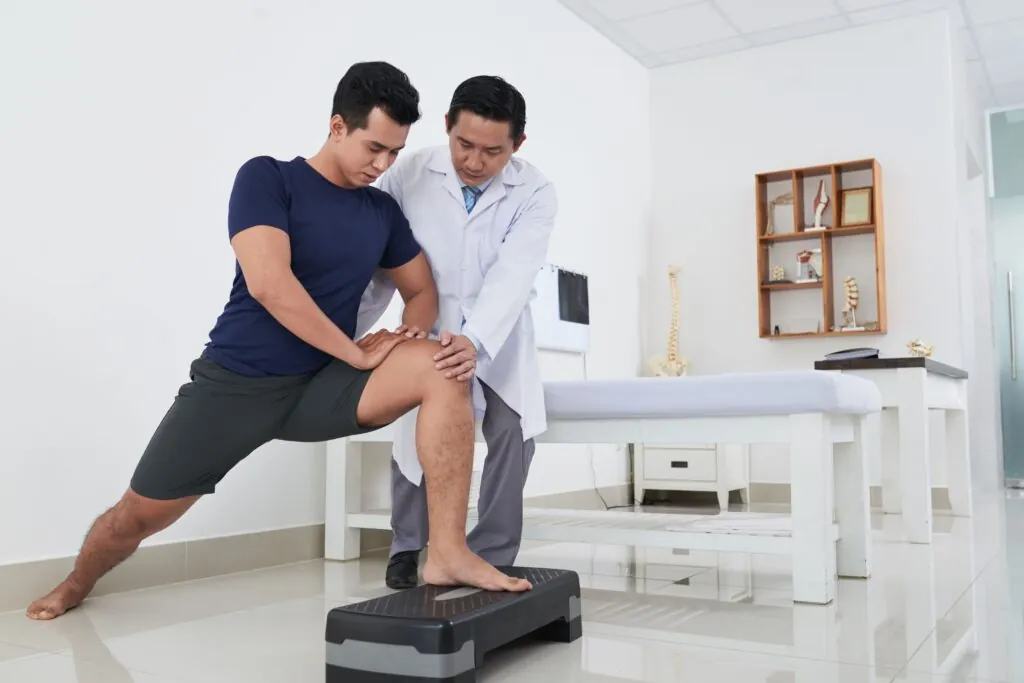
Functional exercises mimic daily activities. Step-ups begin at 4 inches, focusing on a controlled ascent with your operated leg. Push through your heel, not toes, maintaining knee alignment over your second toe. Eccentric control during descent challenges muscles differently – lower slowly over 3 seconds.
Partial squats progress from wall-supported to freestanding. Feet remain shoulder-width apart, knees track over toes without passing them. Depth increases gradually – quarter squats before half squats. Mirror observation helps identify compensatory patterns, such as hip shifting or knee valgus collapse.
Walking program advancement follows specific guidelines. Begin with 10-minute walks on flat surfaces, increasing by 2-3 minutes weekly. Introduce inclines only after managing 30 minutes comfortably on level ground. Treadmill walking offers a controlled environment: start at 2.0 mph, then increase speed before adding incline.
Cycling provides low-impact cardiovascular exercise while improving range of motion. Adjust the seat height so your knee bends approximately 25 degrees at the bottom position. Begin with backward pedalling if forward motion causes discomfort. Resistance stays minimal initially – focus on smooth, complete revolutions rather than power output.
Managing Setbacks and Complications
Swelling increases often signal overactivity. Differentiate between expected post-exercise swelling and inflammatory response. Normal swelling develops gradually over hours, resolves with rest and elevation. Sudden onset swelling, especially with warmth or redness, requires medical evaluation.
Knee stiffness develops from inadequate movement or excessive scar tissue formation. Morning stiffness lasting under 30 minutes represents routine healing. Persistent stiffness throughout the day indicates the need for a modified exercise approach. Gentle, sustained stretches, held for 30-60 seconds, work better than aggressive manipulation.
Muscle weakness patterns reveal rehabilitation gaps. Quadriceps typically show the most significant deficit, manifesting as difficulty rising from chairs or controlling the knee during stair descent. Isolated strengthening exercises target specific weaknesses: terminal knee extensions for the vastus medialis and hip abduction for the gluteus medius.
💡 Did You Know?
Muscle strength imbalances between operated and non-operated legs can persist for years without targeted rehabilitation. Your operated leg needs to achieve 90% strength of your good leg before returning to sports.
Returning to Activities
Activity progression follows tissue healing timelines. Walking unlimited distances typically occurs by week 12. Stair climbing without handrail support indicates adequate strength and confidence. Running requires specific criteria – full range of motion, no swelling with current activities, and quadriceps strength within 20% of the unoperated side.
Sport-specific training begins only after meeting functional milestones. Straight-line jogging precedes cutting movements by several weeks. Jumping and landing mechanics need dedicated training – many re-injuries occur from poor landing technique rather than inadequate strength. Sport-specific drills progress from controlled to reactive movements.
Work return timing depends on physical demands. Desk jobs typically resume at 2-4 weeks with periodic position changes. Standing occupations require 6-8 weeks. Heavy manual labour may need 3-4 months, with a graduated return beginning with light duties. Ergonomic modifications prevent compensatory stress on other joints.
⚠️ Important Note
Returning to activities too quickly remains the primary cause of rehabilitation failure. Your tissues need time to remodel and strengthen regardless of how good you feel.
What Our Orthopaedic Surgeon Says
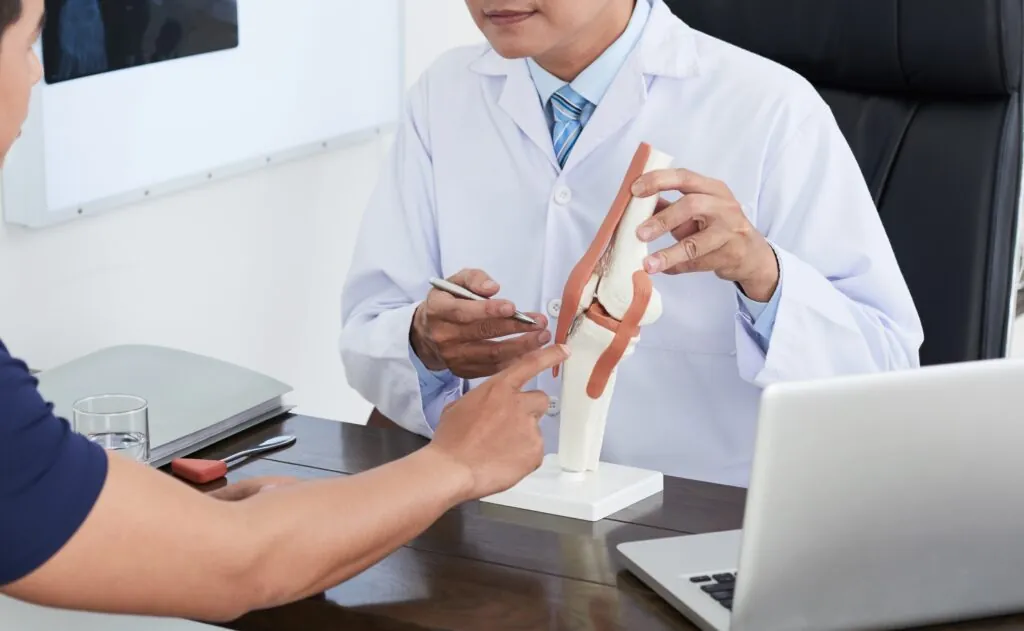
“Successful rehabilitation requires patience and consistency. Patients who follow their prescribed program systematically recover better than those who rush or skip steps. Every knee surgery differs slightly – your rehabilitation should reflect your specific procedure, not generic timelines found online.
Modern rehabilitation emphasises movement quality over quantity. Perfect form with lighter resistance builds a better foundation than heavy exercises performed incorrectly. I tell patients to imagine rehabilitation as building a house – you need solid foundations before adding upper levels.
Communication with your surgical team prevents minor issues from becoming major setbacks. Report unusual symptoms promptly – catching problems early allows simple solutions. Regular follow-ups aren’t just formality – they’re opportunities to optimise your recovery trajectory.”
Putting This Into Practice
- Create a daily exercise log tracking repetitions, resistance levels, and pain responses. Review weekly to identify patterns and adjust accordingly.
- Set up your home exercise space with the necessary equipment: resistance bands, a foam roller, an exercise mat, and a stable chair. Dedicate specific times for exercises to build a routine.
- Film yourself performing exercises weekly. Compare your form to physiotherapist demonstrations, noting compensatory movements that develop unconsciously.
- Establish clear communication with your physiotherapy team. Ask for specific progression criteria rather than time-based guidelines – “when can I increase weight” yields better guidance than “how long until I run.”
- Monitor your operated knee’s response 24 hours post-exercise. Increased swelling or stiffness indicates excessive loading requiring program modification.
When to Seek Professional Help
- Sharp, stabbing pain during or after exercises
- Sudden increase in swelling not responding to rest and ice
- A feeling of the knee “giving way” or instability during walking
- Fever above 38°C with increased knee warmth
- Drainage from surgical incisions beyond the initial two weeks
- Unable to achieve rehabilitation milestones despite consistent effort
- Mechanical symptoms like clicking, catching, or locking
- Night pain is preventing sleep despite pain medication
Commonly Asked Questions
How do I know if I’m pushing too hard during rehabilitation?
Monitor your symptoms 24 hours after exercise. Acceptable responses include mild muscle soreness and slight fatigue. Unacceptable responses include sharp pain lasting for hours, a significant increase in swelling, or the inability to perform previously mastered exercises. Adjust intensity when experiencing negative responses.
Can I skip exercises if my knee feels good?
Feeling good indicates that your current program is working effectively, not that exercises are unnecessary. Each exercise targets specific muscles or movement patterns. Skipping exercises creates strength imbalances or mobility restrictions that manifest weeks later. Consistency throughout the whole rehabilitation period ensures optimal long-term outcomes.
When can I return to sports like tennis or basketball?
Sport return typically requires a minimum of 4-6 months, meeting specific criteria: full range of motion, no swelling with current activities, quadriceps strength within 10% of the opposite side, and completion of a sport-specific training program. Your surgeon and physiotherapist perform functional tests, including single-leg hop tests and agility assessments, before clearance.
Why does my knee still feel stiff in the morning months after surgery?
Morning stiffness commonly persists 6-12 months post-surgery. Overnight joint fluid accumulation and reduced movement during sleep contribute. Perform a gentle range of motion exercises before rising – heel slides and knee bends while still in bed. This “warms up” the joint, easing morning activities.
Should I use heat or ice on my knee?
Ice works best for acute swelling and after exercises, applied 15-20 minutes at a time. Heat helps with stiffness before stretching exercises, applied for 10-15 minutes. Never use heat on swollen areas or immediately after exercise. Some patients alternate between heat and ice, finding this contrast therapy beneficial for both stiffness and swelling.
Next Steps
Successful knee rehabilitation demands structured progression through distinct phases. Focus on movement quality, consistent exercise performance, and respecting your body’s healing timeline. Monitor your responses carefully and communicate any concerns or setbacks to your healthcare team.
If you’re experiencing persistent knee problems or require surgical evaluation, our orthopaedic surgeon can provide a comprehensive assessment and treatment planning.