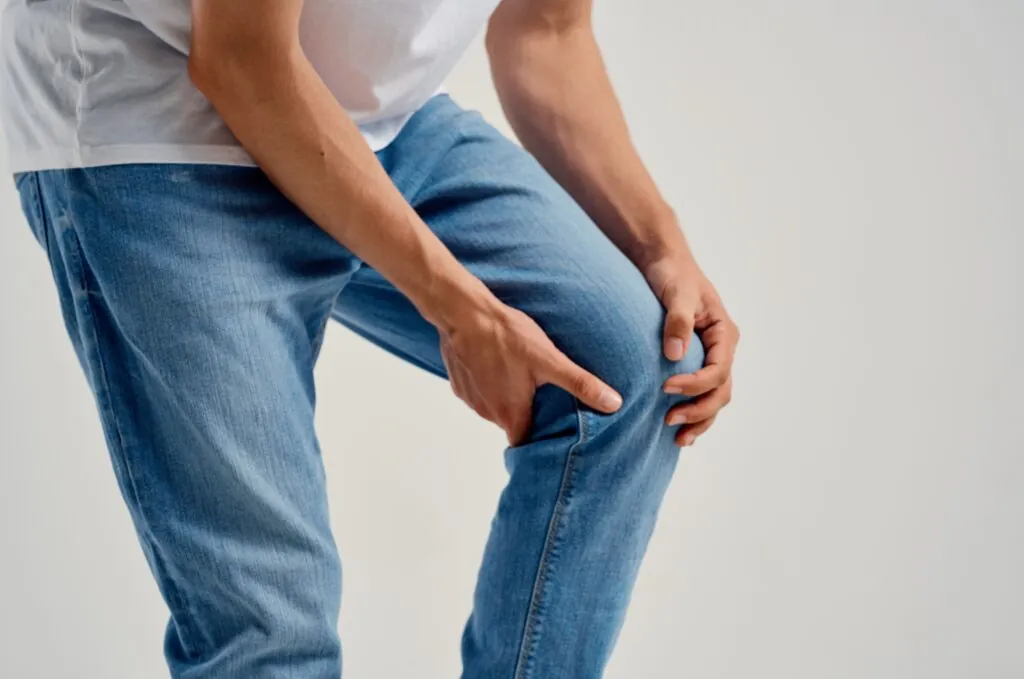
Knee pain during stair climbing results from increased pressure on the patellofemoral joint – forces reaching up to 3.5 times body weight with each step. The specific location, timing, and quality of your pain often indicate which structure needs attention. Sharp pain beneath the kneecap suggests different problems than grinding sensations along the joint line.
Your knee works as a complex hinge, with the kneecap gliding in a groove on your thighbone while tendons and ligaments maintain stability. Stair climbing demands coordinated muscle firing, proper joint alignment, and healthy cartilage surfaces. When any component fails, the repetitive bending and straightening under load trigger pain signals.
Patellofemoral Pain Syndrome
Patellofemoral pain syndrome occurs when your kneecap misaligns in its groove, causing friction and irritation. Pain typically concentrates around or behind the kneecap, worsening during activities that load the bent knee, particularly when descending stairs. You might notice increased discomfort after prolonged sitting, often called the “theatre sign.”
The quadriceps muscles control movement of the kneecap through four distinct heads that merge into a single tendon. Weakness in the inner quadriceps (vastus medialis oblique) allows the kneecap to drift outward, increasing pressure on the lateral facet. Tight hip flexors and IT bands compound this misalignment by pulling the kneecap further off track.
Physical examination reveals tenderness along the borders of the kneecap and pain with resisted knee extension. The patellar grind test – pressing the kneecap while flexing the knee – reproduces symptoms. X-rays may show lateral patellar tilt or subtle signs of cartilage wear, whereas MRI provides more precise visualisation of cartilage surfaces and soft-tissue inflammation.
Treatment focuses on rebalancing muscle forces around the knee. Specific VMO strengthening exercises include terminal knee extensions with the leg slightly turned outward. Hip strengthening targets the gluteus medius through side-lying leg raises and clamshells. Patellar taping provides immediate relief by manually correcting the kneecap position during activities.
⚠️ Important Note
Continuing activities through patellofemoral pain can accelerate cartilage breakdown, potentially leading to permanent damage requiring surgical intervention.
Meniscus Tears
Meniscus tears create distinct mechanical symptoms during stair climbing. The menisci – C-shaped cartilage wedges between your thighbone and shinbone – distribute weight and provide stability. Tears disrupt this cushioning effect, causing pain along the joint line that intensifies with twisting movements or deep knee bends.
Degenerative tears develop gradually as the meniscus loses elasticity and develops small splits. These horizontal cleavage tears differ from acute sports injuries, occurring without specific trauma in middle-aged knees. You might notice clicking, catching, or momentary locking as torn fragments interfere with smooth joint motion.
Clinical testing includes McMurray’s test, which involves rotating the knee with the knee bent while applying pressure, and joint-line tenderness assessment. MRI confirms tear location, pattern, and associated cartilage damage. Degenerative tears often accompany early arthritis, as seen on imaging, including cartilage thinning and bone marrow changes.
Non-surgical management succeeds for many degenerative tears. Physical therapy emphasises quadriceps and hamstring strengthening without aggravating positions. Activity modification means temporarily avoiding deep squats, prolonged kneeling, and pivoting sports. Corticosteroid injections reduce inflammation when conservative measures fail.
Arthroscopic surgery becomes necessary when mechanical symptoms persist despite conservative treatment. Because the meniscus acts as a vital shock absorber, its injury often accompanies or mimics other severe ligament issues. For example, athletes who suffer a meniscus tear during a pivoting injury frequently sustain simultaneous damage requiring ACL tear surgery in Singapore. A partial meniscectomy removes unstable fragments while preserving healthy tissue.
Knee Osteoarthritis
Osteoarthritis transforms smooth joint surfaces into rough, irregular terrain. Cartilage breakdown exposes underlying bone, triggering inflammation and structural changes. Stair climbing becomes particularly challenging as worn surfaces grind together under load, producing pain, stiffness, and audible crepitus.
Morning stiffness lasting less than 30 minutes characterises osteoarthritic joints, improving with gentle movement before worsening with prolonged activity. Bone spurs (osteophytes) develop along joint margins, potentially limiting full extension or flexion. Visible deformity – typically varus (bow-legged) alignment as the inner compartment collapses – occurs in later stages.
Weight-bearing X-rays reveal joint space narrowing, subchondral sclerosis, and osteophyte formation. The Kellgren-Lawrence classification grades severity from 1 to 4, guiding treatment decisions. Standing alignment films assess mechanical axis deviation, necessary for surgical planning if conservative management fails.
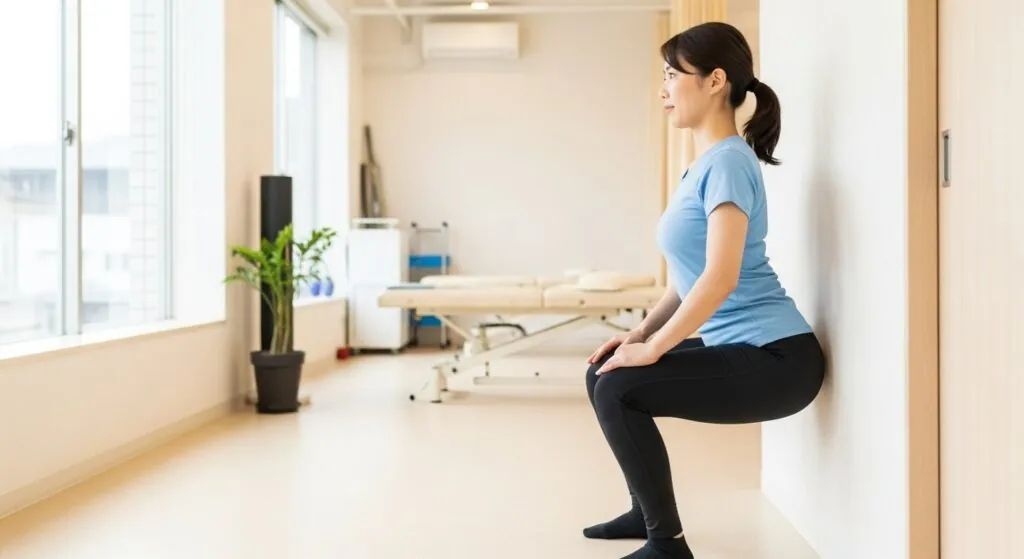
Early-stage management combines weight optimisation, low-impact strengthening, and joint protection strategies. Water-based exercises provide resistance without impact loading. Quadriceps strengthening through straight leg raises and wall sits improves shock absorption. Proper footwear with cushioned soles reduces impact forces during daily activities.
Injectable treatments offer temporary relief when oral medications prove insufficient. Hyaluronic acid injections supplement the body’s natural joint fluid, though the benefits vary. Platelet-rich plasma shows promise for mild-to-moderate arthritis. Corticosteroid injections provide rapid relief but require spacing to avoid cartilage damage.
💡 Did You Know?
Descending stairs places greater stress on arthritic knees than ascending because eccentric quadriceps contraction generates higher joint reaction forces while controlling descent speed.
IT Band Syndrome
Iliotibial band syndrome causes lateral knee pain where this thick fibrous band crosses the outer knee prominence. Repetitive knee flexion and extension during stair climbing creates friction, inflaming the underlying bursa and fat pad. Pain typically begins after several flights of stairs, forcing you to stop or alter your gait.
The IT band originates from hip muscles (tensor fasciae latae and gluteus maximus) and inserts below the knee on Gerdy’s tubercle. Weakness in hip abductors allows excessive internal rotation and adduction during single-leg stance – the moment when climbing stairs places maximum demand on lateral structures.
Ober’s test assesses IT band tightness by measuring hip adduction with the knee extended. Noble’s compression test reproduces pain by pressing the lateral epicondyle while extending the knee from 90 to 30 degrees – the “impingement zone” during stair climbing. Ultrasound may show thickening or fluid beneath the IT band.
Treatment addresses both local inflammation and contributing biomechanical factors. Foam rolling the lateral thigh – avoiding direct pressure over the inflamed area – reduces tension along the IT band’s length. Hip strengthening through side planks and single-leg bridges corrects dynamic valgus collapse.
Activity modification during acute phases means limiting stair climbing and avoiding running on cambered surfaces. Ice application after activity reduces inflammation. Stretching programs must include hip flexors and lateral structures, not just the IT band itself. Severe cases benefit from corticosteroid injection into the lateral recess.
Patellar Tendinitis
Patellar tendinitis creates pain at the front of your knee, specifically where the patellar tendon attaches to the bottom of your kneecap. This overuse injury develops when repetitive loading exceeds the tendon’s capacity to repair itself, leading to microtears and degeneration. Stair climbing aggravates symptoms through repeated eccentric quadriceps contractions.
The condition progresses through distinct stages. Early tendinitis causes pain only after activity. Progressive degeneration leads to pain during activity that doesn’t limit performance. Later stages produce pain throughout activity and at rest, with thickening visible on examination.
Diagnosis relies on precise palpation of the inferior patellar pole to reproduce familiar pain. Ultrasound reveals tendon thickening, hypoechoic areas indicating degeneration, and neovascularisation in chronic cases. MRI shows similar findings plus associated bone marrow oedema at the patellar insertion.
Eccentric strengthening forms the cornerstone of tendon rehabilitation. Single-leg squats on a decline board specifically load the patellar tendon through controlled lengthening contractions. Starting with body weight, progression adds external resistance once form remains perfect through 3 sets of 15 repetitions.
Load management prevents further damage while maintaining fitness. Cross-training with swimming or cycling reduces tendon stress. Patellar tendon straps redistribute forces during necessary stair climbing. Treatment duration typically spans 12-16 weeks, with gradual return to complete activities based on pain response rather than arbitrary timelines.
✅ Quick Tip
Perform eccentric exercises twice daily during initial rehabilitation phases – consistency matters more than intensity for tendon remodeling.
What Our Orthopaedic Surgeon Says
Knee pain patterns during stair climbing provide valuable diagnostic clues. Patients often adapt their movement patterns unconsciously – leading with the unaffected leg going upstairs and the affected leg going downstairs minimises pain but perpetuates muscle weakness.
Successful treatment requires addressing both symptoms and underlying biomechanical issues. Many patients benefit from temporary activity modification combined with targeted strengthening. Those with persistent mechanical symptoms or structural damage may require surgical intervention, but conservative management succeeds for many patients when applied consistently.
Early intervention prevents compensatory patterns from becoming entrenched. Ignoring knee pain during stairs often leads to altered gait mechanics that stress adjacent joints, creating secondary problems in the hips and ankles.
Putting This Into Practice
- Modify your stair climbing technique immediately: Take one step at a time rather than alternating feet. Use handrails for support and weight distribution. Lead with your stronger leg going up and your affected leg going down to minimise loading on the painful knee.
- Implement daily strengthening exercises: Perform straight leg raises in four directions (forward, backwards, inward, outward), holding each for 5 seconds. Add mini-squats to 45 degrees, wall sits, and step-downs from a 4-inch platform as pain allows.
- Apply ice after aggravating activities: Use crushed ice wrapped in a damp towel for 15-20 minutes after stair climbing or exercise. Elevate the leg above heart level during icing to maximise anti-inflammatory effects.
- Optimise your footwear: Replace worn shoes showing uneven tread patterns. Consider cushioned insoles or custom orthotics if you have flat feet or high arches affecting knee alignment.
- Track your symptoms: Record pain levels, location, and triggering activities in a diary. Note which movements cause sharp versus aching pain, helping your doctor pinpoint the affected structure.
When to Seek Professional Help
- The knee gives way or buckles during stair climbing
- Locking episodes prevent full extension or flexion
- Visible swelling persisting for more than 48 hours
- Night pain disrupting sleep
- Inability to bear weight without severe pain
- Clicking or catching sensations with associated pain
- Pain persists beyond two weeks despite rest and ice
- Redness or warmth suggesting infection
- Previous injury with new or worsening symptoms
Commonly Asked Questions
Should I push through mild knee pain when climbing stairs?
No. Mild pain signals early tissue stress. Continuing through pain often converts minor issues into chronic problems requiring extended treatment. Modify activities at the first sign of discomfort, using elevators or escalators temporarily while addressing the underlying cause through appropriate exercises.
Why does going downstairs hurt more than going up?
Descending stairs requires eccentric quadriceps contraction – your muscles lengthen while contracting to control descent speed. This generates higher patellofemoral joint forces than the concentric contractions used for climbing up. Additionally, the knee flexion angle during descent often coincides with the areas of maximum contact stress.
Can knee sleeves or braces help with pain from stair climbing?
Compression sleeves provide proprioceptive feedback and warmth that may reduce discomfort. Patellar stabilising braces with lateral buttresses help patellofemoral pain by improving tracking. However, braces work best combined with strengthening exercises rather than as standalone solutions. Prolonged use without addressing muscle weakness can lead to further deconditioning.
How long before I see improvement with exercises?
Strengthening programs typically show initial benefits within 2-3 weeks, with continued improvement over 8-12 weeks. Tendon-related pain responds more slowly than muscle weakness. Consistency matters more than intensity – daily exercises at moderate effort outperform sporadic intense sessions.
Should I take anti-inflammatory medication before climbing stairs?
Regular pre-emptive medication use masks necessary pain signals and may delay proper diagnosis. Occasional use for unavoidable stair climbing is reasonable, but a persistent need for medication indicates inadequate treatment of the underlying condition. Topical anti-inflammatories provide localised relief with fewer systemic effects.
Next Steps
Knee pain during stair climbing stems from identifiable structural problems – patellofemoral dysfunction, meniscus tears, arthritis, IT band syndrome, or patellar tendinitis each creates distinct patterns. Early intervention through targeted exercises and activity modification prevents progression. Persistent mechanical symptoms require professional evaluation to determine whether structural damage needs surgical correction.
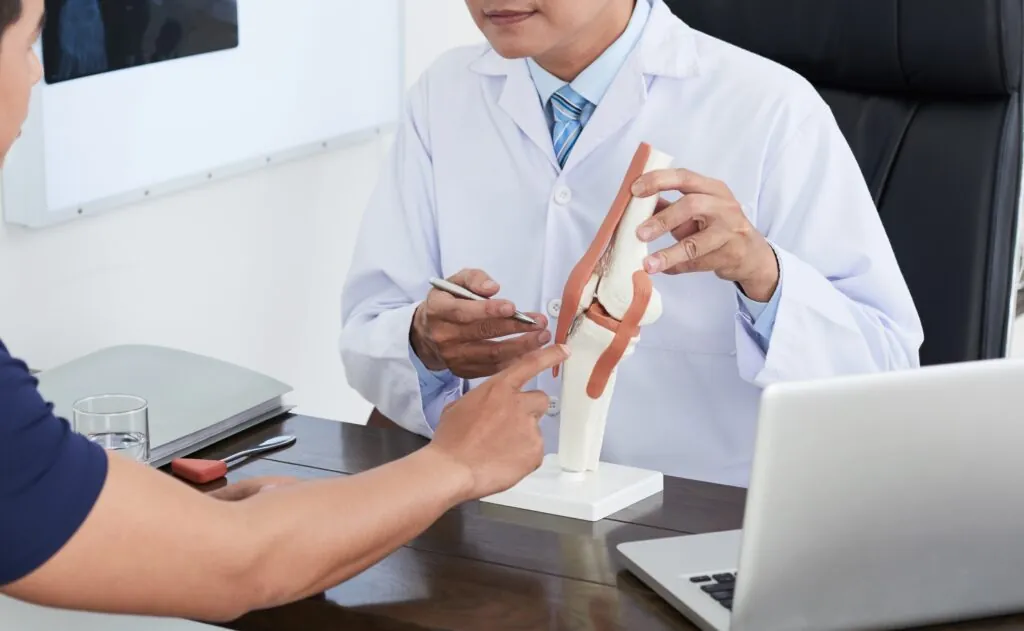
If you’re experiencing knee pain when climbing stairs, our orthopaedic surgeon can provide a comprehensive evaluation and treatment options.