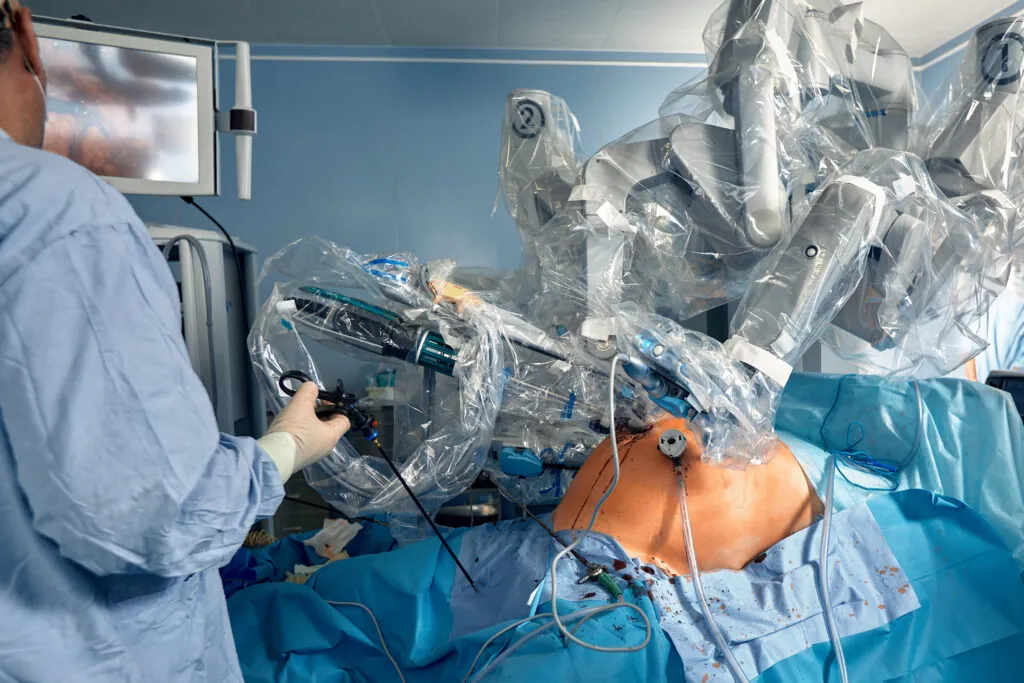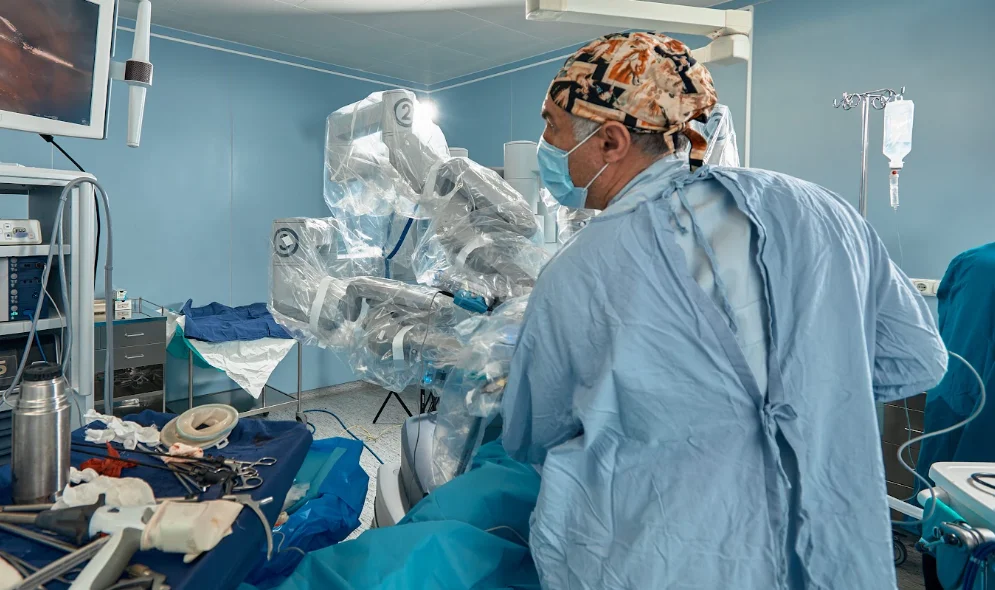
Robotic-assisted knee replacement is associated with consistent implant positioning relative to the planned surgical angle. For patients under 65, this consistency carries practical weight, since their implants are intended to function through many years of active use.
The technology creates a three-dimensional map of each patient’s knee anatomy before surgery, allowing surgeons to plan bone cuts and implant positioning specific to that individual’s joint structure.
How Robotic Systems Work During Surgery
Before surgery, imaging creates a detailed model of the patient’s knee joint, which the robotic system uses to track instruments and guide bone cuts against the surgical plan. The surgeon remains in full control throughout, with the technology providing real-time guidance and adjustment rather than performing any part of the procedure independently.
- Pre-operative mapping: CT or MRI imaging captures the knee’s bone density variations and soft tissue attachments to build a personalised surgical plan.
- Real-time tracking: The robotic arm monitors instrument position during surgery and provides feedback if cuts deviate from the plan.
- Protective boundaries: Virtual boundaries aim to keep the saw within the planned bone removal area, designed to help protect surrounding ligaments, healthy bone, and cartilage.
- Surgeon-led operation: The surgeon performs all surgical steps; the system acts as a guidance tool rather than operating autonomously.
- Dynamic recalibration: If the knee shifts position during surgery, the navigation system continuously updates its boundaries to help maintain accuracy.
Bone Preservation in Younger Patients
Younger patients present a specific surgical consideration: future revision surgery. Most knee implants eventually require replacement, and revision procedures become more complex when significant bone has been removed during the initial surgery.
Robotic assistance may allow surgeons to remove only the minimum bone necessary for implant fixation. Traditional techniques often require slightly larger bone cuts to ensure adequate surface area for implant stability. The precision of robotic-guided cuts means surgeons can aim for secure fixation whilst preserving additional bone stock.
This preservation can provide more options for future surgeons. Revision implants require anchoring into remaining bone, and patients who retain more bone structure during their primary surgery may have better foundations for subsequent procedures. For a 55-year-old patient, this consideration extends across potential revision surgeries at ages 75 and possibly beyond.
💡Did You Know?
The knee joint contains four main ligaments (the ACL, PCL, MCL, and LCL) along with two menisci that work together during movement. Robotic systems map the position of these soft tissue structures before surgery, allowing surgeons to plan bone cuts that maintain proper tension across the joint.
Implant Alignment and Long-Term Function
Proper implant alignment affects how forces distribute across the artificial joint surfaces during daily activities, and malaligned implants can create uneven wear patterns that may accelerate degradation of the bearing surfaces over time.
Robotic planning can support kinematic alignment, positioning implants according to each patient’s natural joint angle rather than a standard population average, which may help preserve more natural-feeling movement.
Sensors can also measure soft tissue tension as the knee moves during surgery, providing information that may help guide implant positioning for consistent joint stability.
Activity Considerations for Younger Patients
Patients under 65 typically expect to resume activities that place significant demands on knee implants, and daily movements such as walking, stair climbing, and higher-impact activities generate progressively greater forces across the joint.
- Load distribution: Proper implant positioning aims to distribute these forces across the largest possible surface area of the artificial components, which may help reduce stress concentrations that could contribute to loosening.
- Activity guidance: Activity restrictions after robotic-assisted surgery generally mirror those after conventional replacement, and high-impact activities such as running and jumping typically remain discouraged regardless of surgical technique.
⚠️ Important note:
Robotic assistance may improve surgical precision but does not eliminate the mechanical constraints of artificial joint components, as implant longevity also depends on activity choices, body weight, and individual healing.
Recovery Timeline Expectations
Soft tissue handling during robotic-assisted procedures may contribute to differences in recovery, as contained cutting boundaries are designed to reduce inadvertent trauma to surrounding muscles and tendons.
- Hospital stay: Hospital stays following robotic-assisted knee replacement range from same-day discharge to 2-3 nights, depending on patient factors and surgical centre protocols.
- Early rehabilitation: Physical therapy typically begins within hours of surgery, focusing on range of motion and early weight-bearing.
- Return to work: Return to desk-based work typically occurs within 2-4 weeks, while jobs requiring prolonged standing or walking may require 6-8 weeks before full return.
- Physical milestones: Milestones such as walking without assistive devices, climbing stairs normally, and returning to recreational activities follow individual timelines influenced by pre-operative fitness, surgical complexity, and rehabilitation adherence.
Cost and Accessibility Factors
Robotic systems require substantial capital investment and ongoing maintenance, which can translate to higher surgical fees, and the additional setup and registration time involved may further contribute to facility costs in some billing structures.
Availability also varies across healthcare centres, as not all facilities have invested in robotic platforms, and surgeon experience with these systems can differ widely. The technology does not replace surgical skill; it supports the judgment of trained surgeons who understand both its capabilities and its limitations.
Patient Selection Considerations
May offer greater benefit for:
- Patients with previous knee surgeries
- Unusual bone deformities
- Significant angular malalignment
- Anatomical complexity that challenges conventional techniques is where computer-guided planning may offer the most value.
Potential limitations:
- Severe obesity, as soft tissue thickness can affect the accuracy of surface registration
- Previous metal implants, which may require modified imaging protocols or rule out certain robotic platforms
✅ A note on age
Age alone does not determine candidacy. The decision involves weighing the potential benefits of precision against additional costs and the availability of surgeons experienced in robotic techniques. Younger patients with straightforward anatomy might achieve comparable results with conventional techniques performed by skilled surgeons.
When to Seek Professional Help
- Knee pain that persists despite 6 or more months of conservative treatment including physical therapy
- Difficulty walking distances you previously managed without discomfort
- Night pain that disrupts sleep despite positioning adjustments
- Knee instability or giving way during daily activities
- Inability to participate in activities important to your quality of life
- X-ray evidence of significant cartilage loss in weight-bearing portions of the joint
Commonly Asked Questions
Does robotic surgery mean a robot performs my operation?
The surgeon performs all surgical steps whilst the robotic system provides guidance and feedback. The mechanical arm does not make autonomous movements; it assists by tracking instrument position and providing resistance if cuts approach planned boundaries. Your surgeon remains in complete control throughout the procedure.
How long do robotic-assisted knee implants typically last?
Current implants, whether placed with robotic assistance or conventional techniques, have documented survival extending beyond 20 years in many patients, with some registry data showing survival rates above 20 years in roughly 9 out of 10 cases. The theoretical advantage of robotic precision may extend implant longevity, but insufficient time has passed to confirm this through long-term studies specific to robotic techniques.
Will I need to stay longer in the hospital with robotic surgery?
Hospital stays for robotic-assisted procedures are generally comparable to or shorter than conventional approaches. Many centres offer same-day discharge for appropriate candidates. Your overall health, home support system, and pain management needs tend to influence discharge timing more than the specific surgical technique used.
Can robotic surgery help if I’ve already had a previous knee operation?
Previous surgeries can increase the potential benefit of robotic assistance. The imaging and planning process accounts for altered anatomy, previous hardware, and bone loss from earlier procedures. Your surgeon can determine whether your specific surgical history makes you a suitable candidate.
Is there an age limit for robotic-assisted knee replacement?
No specific age cutoff exists. Candidacy depends on overall health, activity goals, and the severity of knee degeneration rather than chronological age. Younger patients may have more to gain from precision techniques due to longer expected implant service, but older patients can also benefit from the surgical accuracy robotic systems provide.
Next Steps
Robotic-assisted knee surgery offers two potential advantages for younger patients: more consistent implant positioning and greater preservation of bone stock for future revision procedures. High-impact activities remain restricted regardless of surgical technique, and long-term outcome data specific to robotic approaches is still accumulating. The decision hinges on weighing these potential benefits against higher costs and the availability of surgeons experienced with robotic platforms.
If you are experiencing persistent knee pain, knee instability, or difficulty walking distances you previously managed without discomfort, an accredited orthopaedic surgeon can evaluate your joint condition and discuss whether robotic-assisted or conventional knee replacement may be more suitable for your needs.